The Booth
The recording environment for a talking book is not a luxury. It is a technical requirement. A narrator speaking into a condenser microphone in an ordinary room will capture the sound of that room: the hiss of ventilation, the creak of the building, reflections bouncing off plasterboard and glass. None of it is audible to someone in the room. All of it survives in a recording.
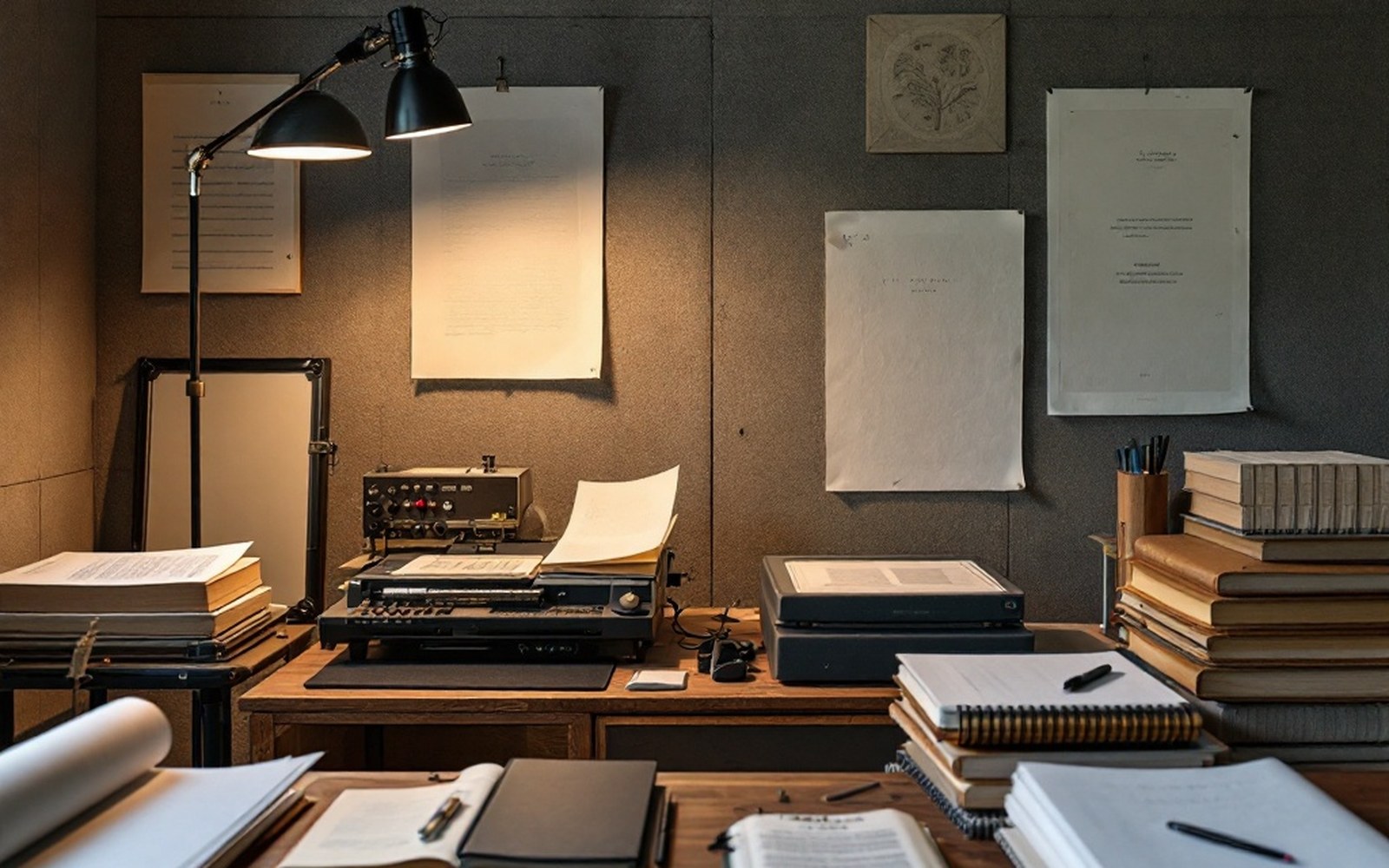
01A room that does not exist until sound does
Professional studios use acoustic treatment — absorptive foam panels, bass traps in corners, a floor floated on rubber mounts — to eliminate those reflections and to lower the noise floor to a level where quiet consonants are not buried in room tone. Purpose-built vocal booths take this further: a small sealed space inside a larger space, so that the outer walls handle external sound and the inner walls handle the room's own acoustic signature. It is a room built to approximate silence.
The furniture matters in ways that sound strange until you have heard the alternative. A chair must not creak when a narrator shifts weight during a three-hour session. Fabric on the seat absorbs clothing noise. Some narrators record standing. Some use a small angled stand for the script so they do not rustle pages — or record from a tablet to eliminate paper entirely. The microphone sits on a shock mount, which isolates it from desk vibration, and is positioned to avoid the burst of air that accompanies hard consonants: a pop shield, a disc of nylon mesh or stretched fabric, placed between mouth and capsule.
The technical term for the ratio that defines audio production is "studio-to-finished ratio": how many hours of recording and editing it takes to produce one finished hour of audio. For a straightforward text, that ratio is rarely below three to one. A book with complex apparatus — footnotes, tables, multiple voices for different text elements — will run higher. A narrator working alone typically delivers two to four finished hours per full session. A producer listens in real time, marking errors and editing them out, or the narrator self-edits using a double-breath cue to mark a retake. Either way, a recorded book is a performance that has been assembled, syllable by syllable, from a much longer day's work.
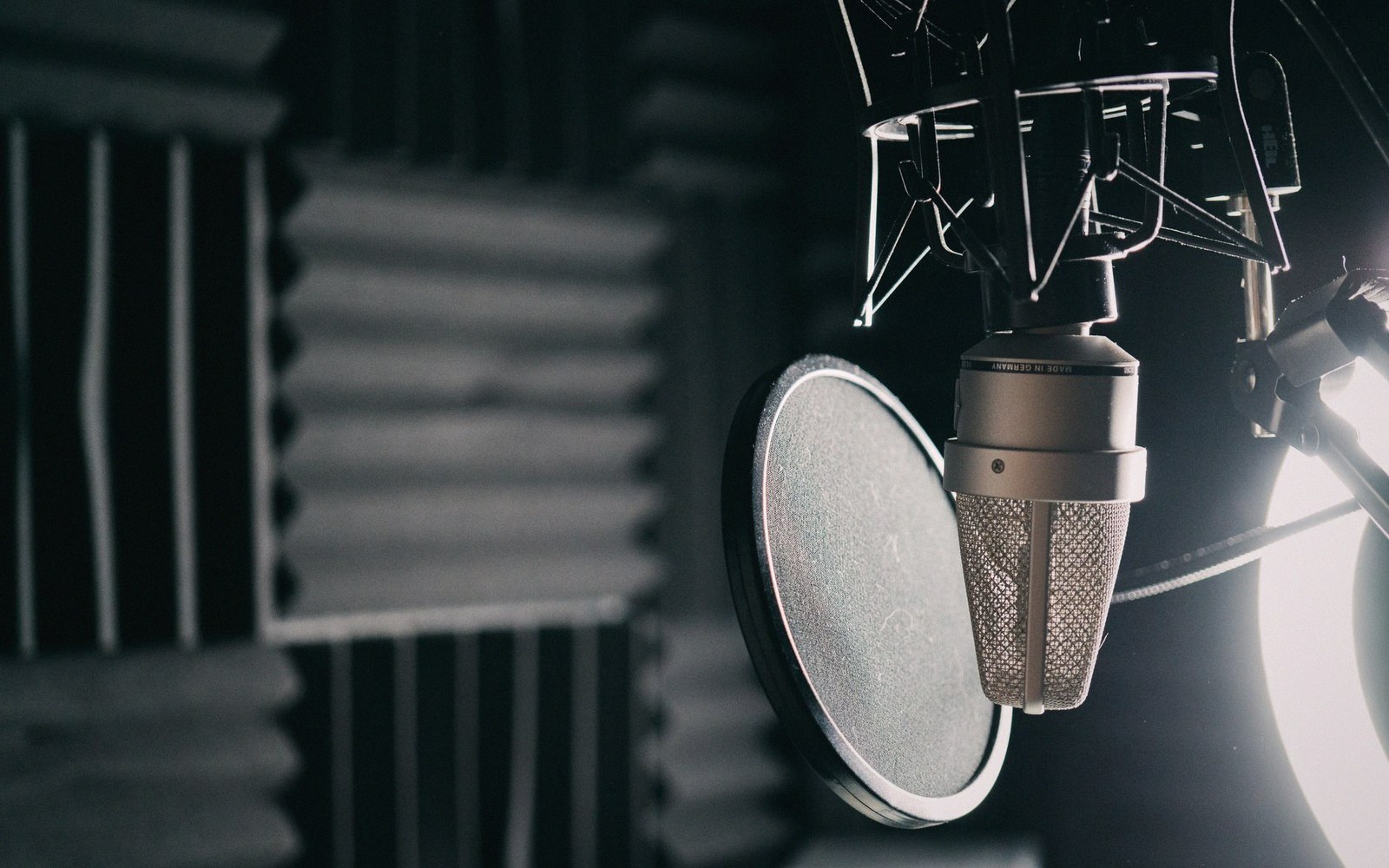
What the listener receives is a compressed version of that effort: a clean, level, continuous voice with no intrusion from the world outside the words. The booth exists to make that compression possible — to subtract everything except the narrator, the text and time.
The arithmetic of recording
From the register| Item | What it means |
|---|---|
| Studio-to-finished ratio | hours of work per one finished hour of audio; rarely below 3:1 for straightforward text; higher for complex apparatus |
| Typical session yield | two to four finished hours per full recording session for a single narrator |
| Noise floor | the background level below which quiet sounds are lost; acoustic treatment is measured against it |
Some use a small angled stand for the script so they do not rustle pages — or record from a tablet to eliminate paper entirely.
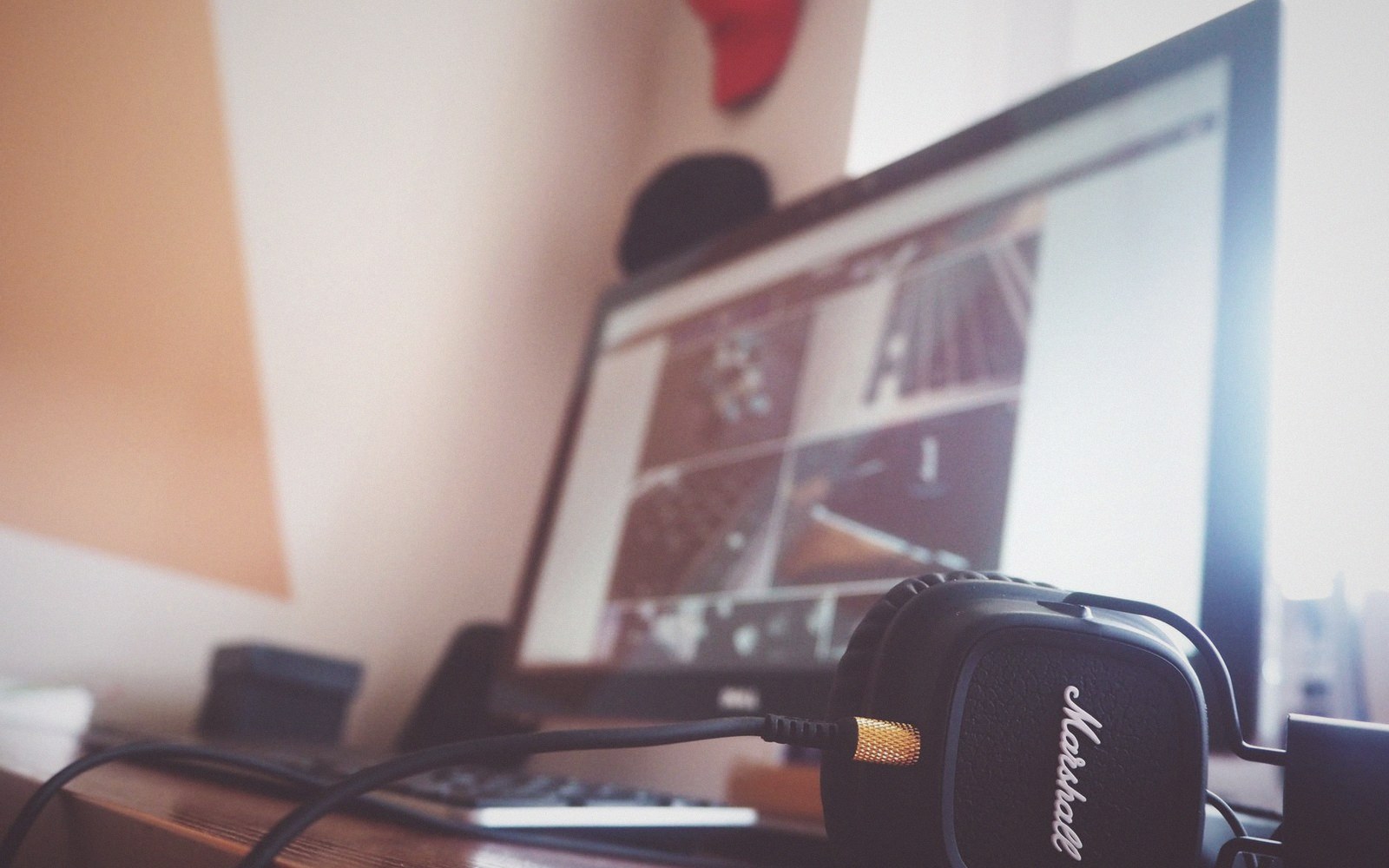
Kit in the booth
From the register| Item | What it means |
|---|---|
| Condenser microphone | sensitive to room reflections; requires acoustic treatment around it |
| Shock mount | isolates the microphone from desk and floor vibration |
| Pop shield | nylon mesh or stretched fabric; placed between mouth and capsule to stop consonant air bursts |
| Bass traps | corner-placed absorbers targeting low-frequency room resonance |
| Floated floor | rubber-mounted floor construction to decouple inner booth from building vibration |
More in Audio
Related entriesThis is an independent publication about accessible book formats. It is not a library, publisher or lending service, and it does not provide access to books or documents.