Section 01 of the register
Braille
Six raised dots in two columns give sixty-three usable combinations. Everything after that — contractions, separate codes for music and mathematics, the weight of the paper, the number of volumes — is production, and most of it is still done by hand.
- What it holds
- The exact text, its spelling and its print page references, read by touch with no device required.
- What it does not
- Bulk. One print volume becomes several, and anything laid out in two dimensions survives only as a translation.
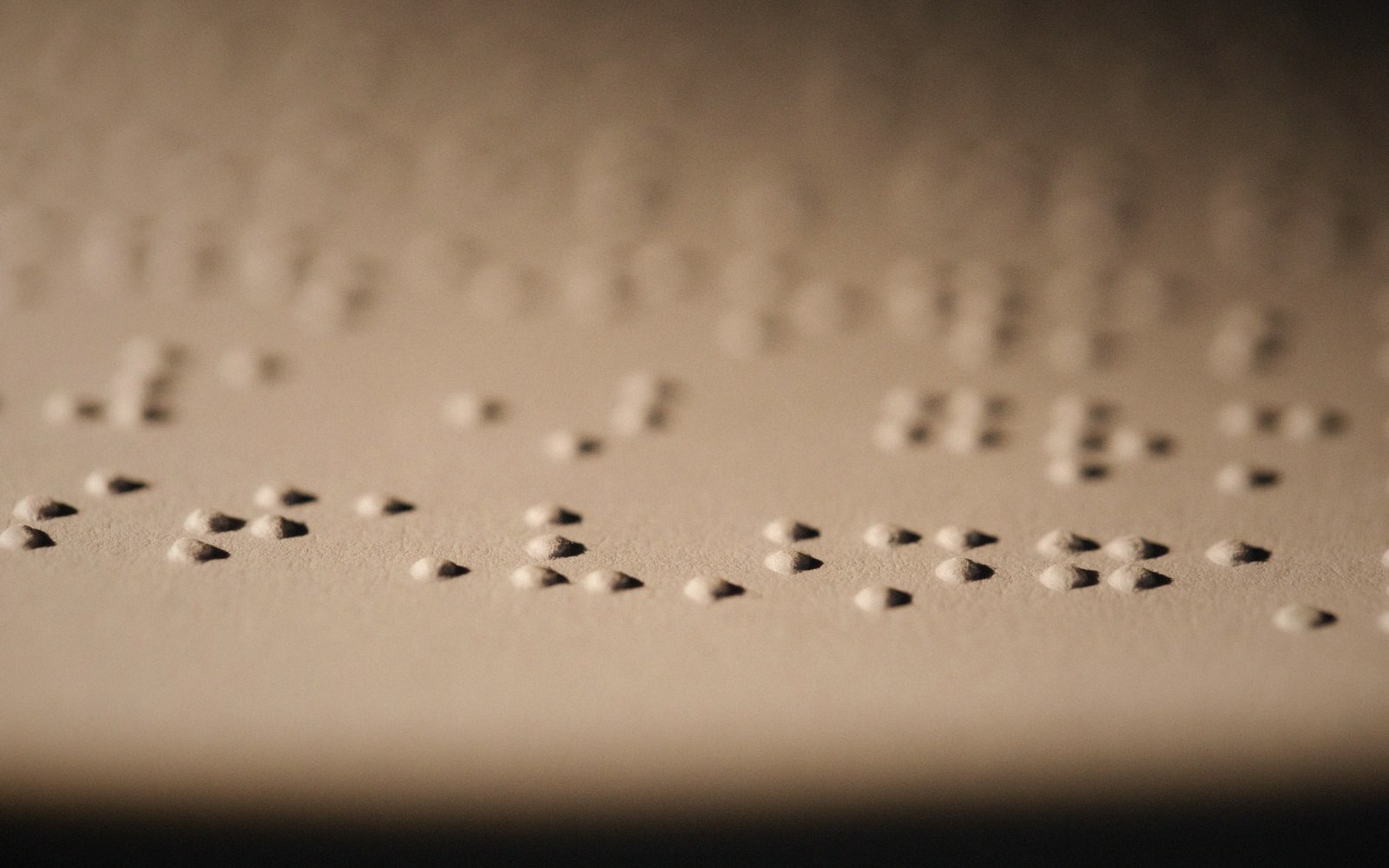
Entries in Braille
Filed by format, not by title- Six Dots, and What They CarryThe cell as an information system: 63 combinations, and how a whole writing system is built from them.
- Contracted Braille Is a Different LanguageGrade 2 replaces common words and letter groups with single cells.
- What an Embosser Actually DoesPaper, pressure and dot height.
- Braille Is EnormousA single print novel becomes several large volumes.
- The Pin ArrayA refreshable display raises and lowers pins under a line of text.
- Braille for Music and MathematicsSeparate notations layered onto the same six dots, and why a maths textbook is one of the hardest things to transcribe.