Contracted Braille Is a Different Language
Uncontracted braille maps letters to dots one-for-one. Grade 2 is something else entirely — a compression system learned on top of a writing system.
01What Contractions Actually Are
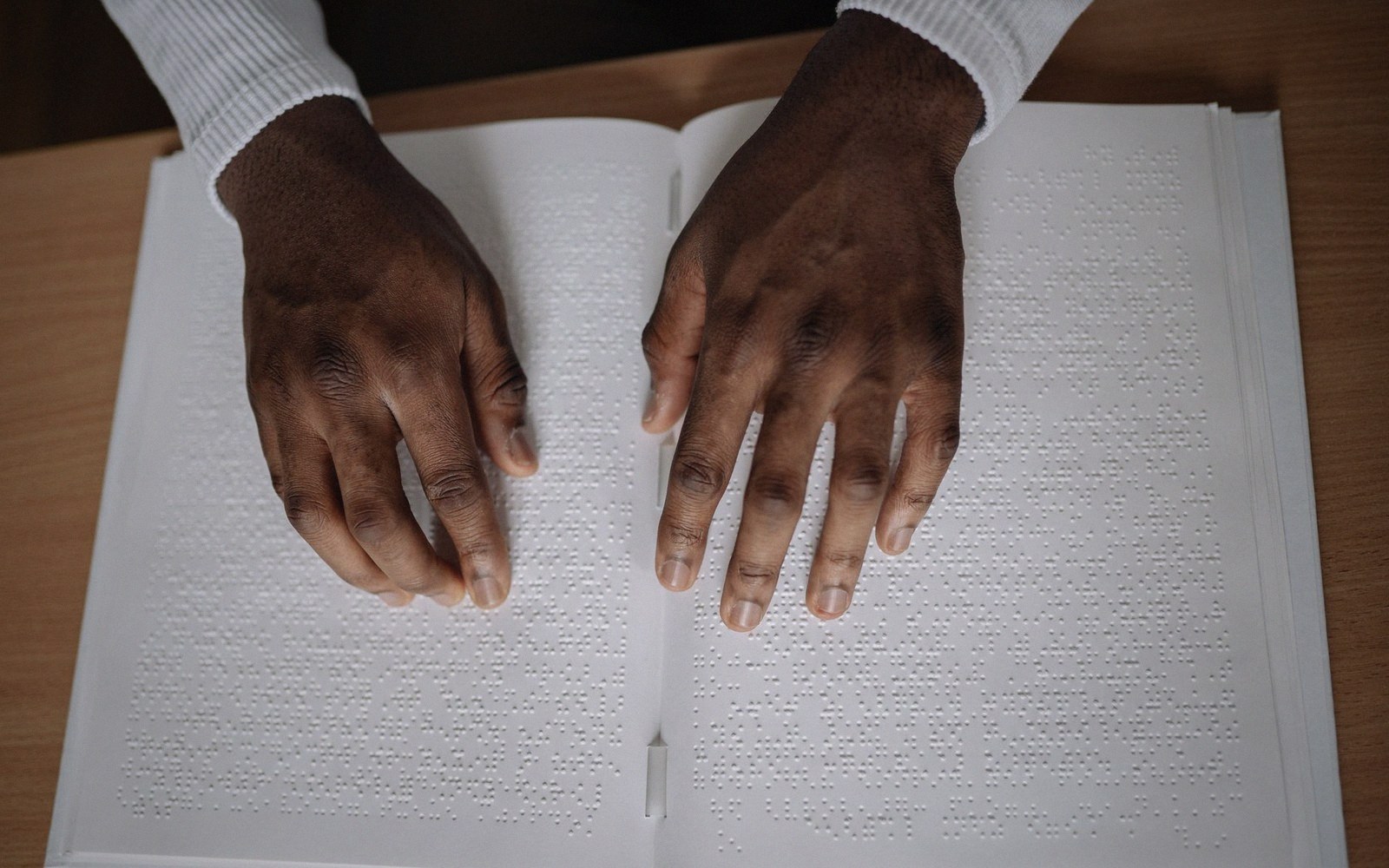
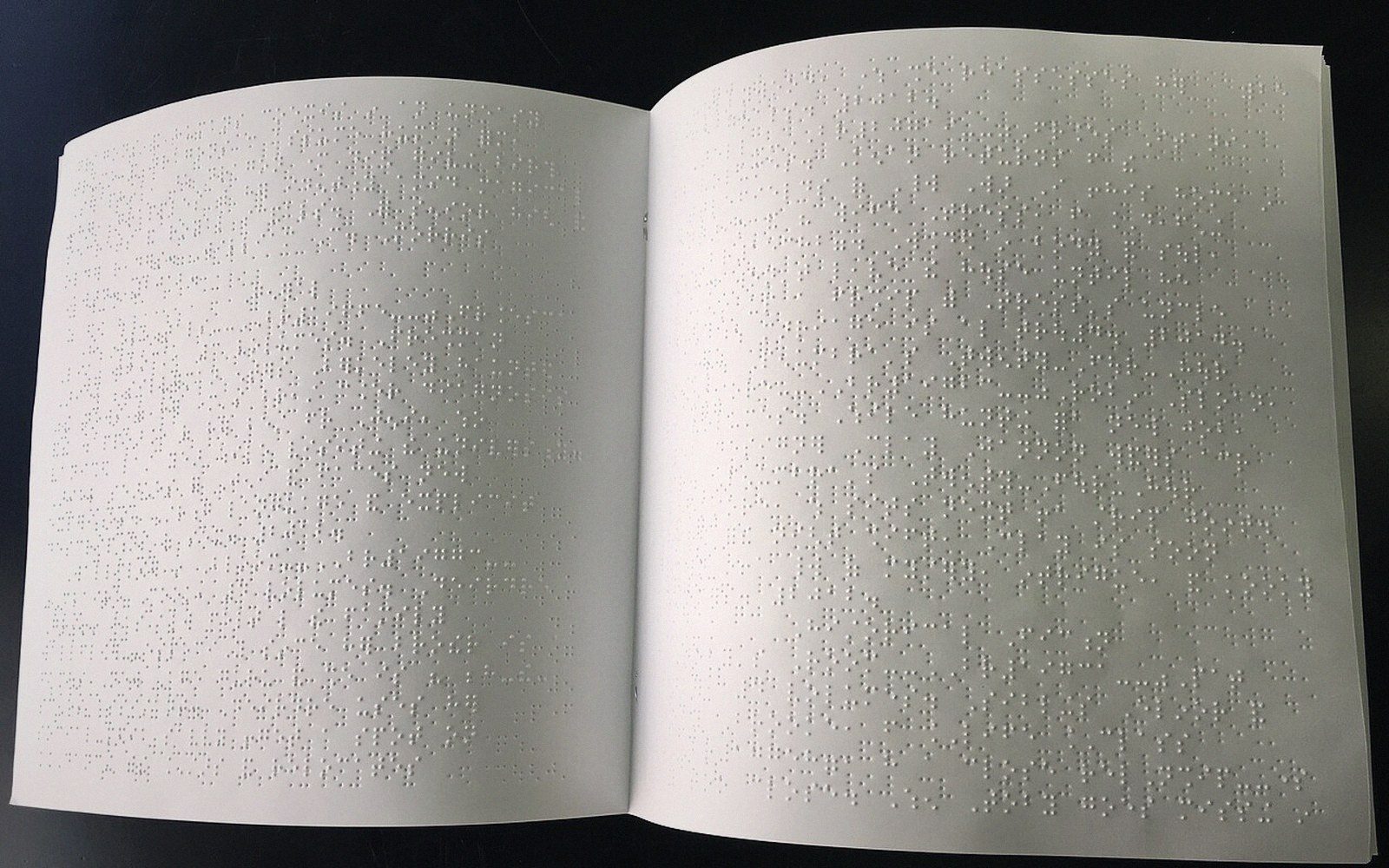
Uncontracted braille, sometimes called Grade 1, is loyal to the alphabet: each cell represents one letter, and a word like the takes three cells. That fidelity is simple to learn and simple to produce, but it is costly in space. Braille is already enormous on the page; a system that writes every letter of every word makes the problem worse.
Grade 2 — contracted braille — answers with abbreviation. A single cell stands for the whole word the. Another single cell means and, another means for, another of, another with. These are whole-word contractions. Then there are part-word contractions: a specific dot pattern replaces the letter group -tion, another replaces -ing, another -ound, and so on — around 180 rules in total in English Grade 2, governed by the Unified English Braille standard that took effect across most English-speaking countries through the 2010s.
The savings in cells are real. A contracted text runs roughly a quarter shorter than its uncontracted equivalent, which is not nothing when a single print novel can already fill several braille volumes. Speed also improves for an experienced reader, because common words become single gestures under the fingertips rather than sequences of three, four or five cells traced in order.
02What the Reader Pays for That Compression
None of this is free. A new reader has to learn two things simultaneously: the braille alphabet itself, and a second layer of meaning assigned to cells that already have an alphabetic meaning. Context governs which meaning applies, and context takes time to internalise.
Certain contractions are position-sensitive: a pattern that means and in isolation means something different when it appears mid-word. Others depend on whether a cell stands alone or touches adjacent cells. The rules are not arbitrary — they follow a logic — but that logic is not obvious from the surface, and mistakes in production cause real reading failures. A misplaced contraction can render a passage genuinely ambiguous.
This is one reason proofreading by a trained braille reader is not optional polish but structural necessity. A sighted checker reading a braille file on screen sees letters; a reader by touch feels meaning, and only the second kind of check catches a contraction placed wrong.
How the numbers stack up
From the register| Item | What it means |
|---|---|
| Whole-word contractions in English Grade 2 | around 75 common words reduced to single cells |
| Part-word contractions (letter groups) | roughly 100 additional patterns |
| Total rules in English Grade 2 | approximately 180 |
| Space saving over uncontracted braille | roughly 25 percent shorter text |
Grade 2 is what most adult braille readers use. It is what most braille production targets. Learning it is not a shortcut — it is a second language learned through a sense most sighted people have never read with.
Others depend on whether a cell stands alone or touches adjacent cells.
What it costs a learner
From the register| Item | What it means |
|---|---|
| Grade 1 to Grade 2 is not a continuation | it is a new layer of encoding |
| Contractions are context-sensitive | the same cell pattern carries different meanings depending on position within a word or sentence |
| Errors in production are tactilely real; a misplaced contraction is felt, not just seen |
More in Braille
Related entriesThis is an independent publication about accessible book formats. It is not a library, publisher or lending service, and it does not provide access to books or documents.