What an Embosser Actually Does
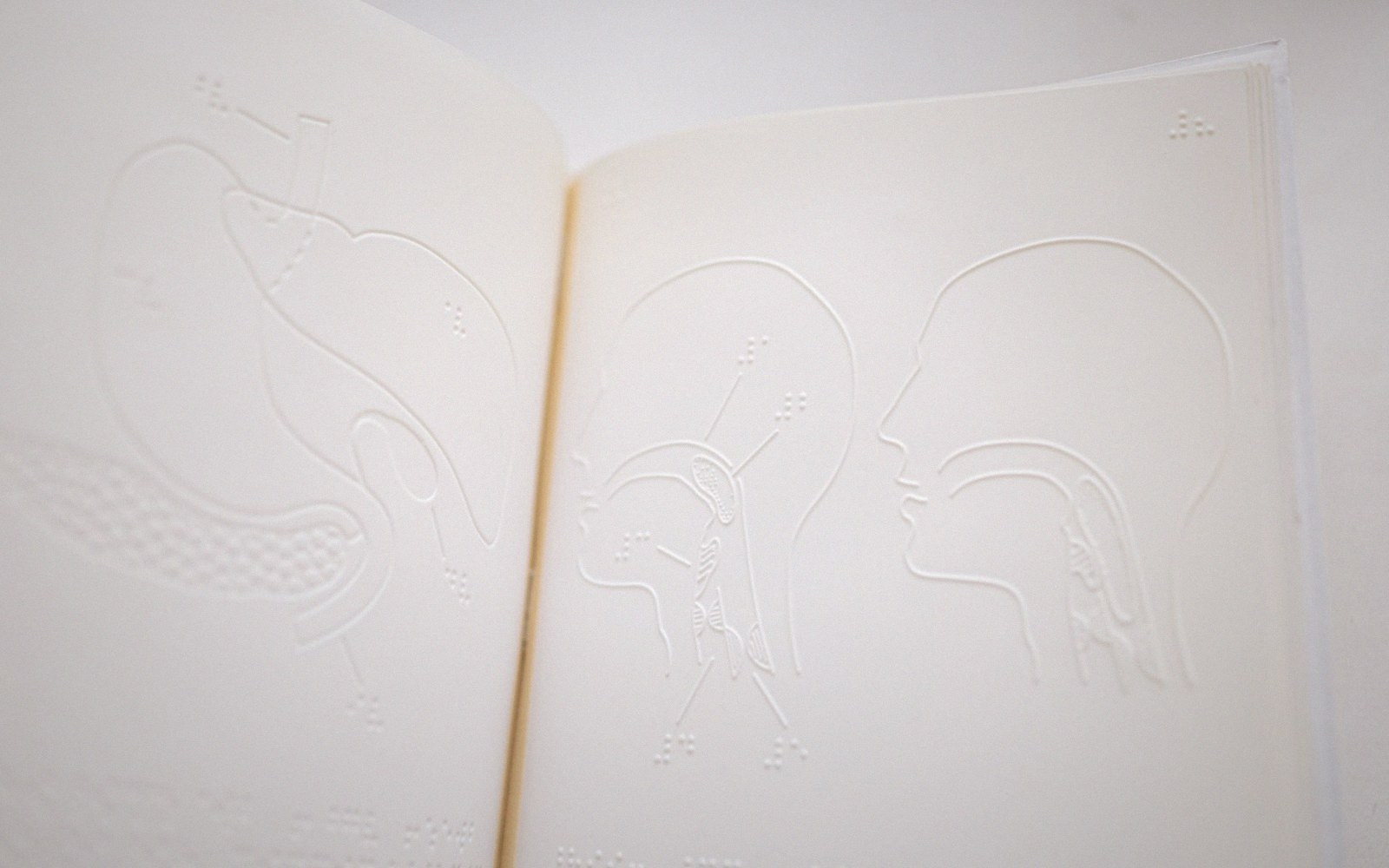
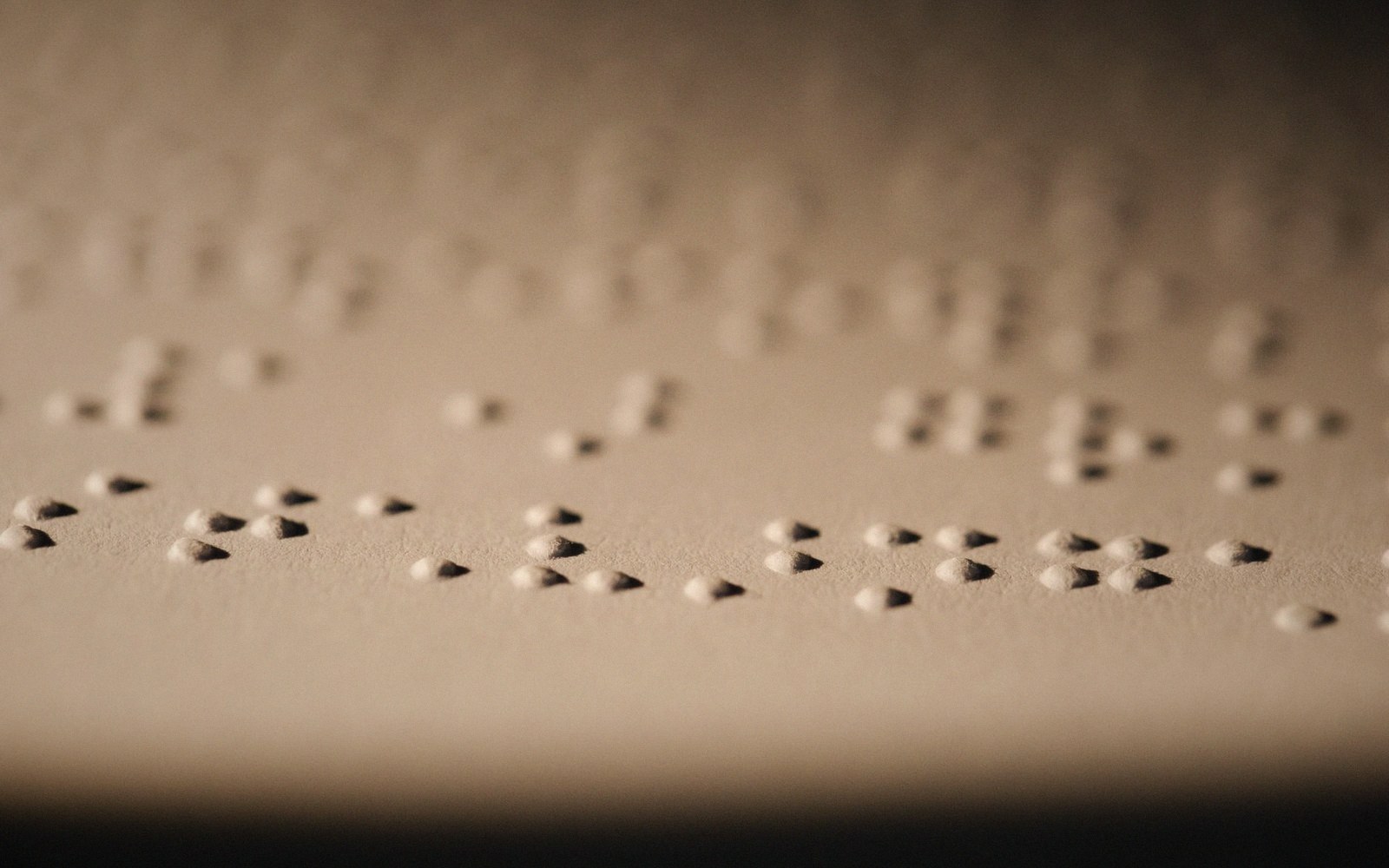
Braille is not printed. It is pressed. An embosser drives a hard steel pin against a sheet of paper with enough force to permanently deform the fibre, raising a dome on the far side. That dome — roughly half a millimetre high — is what a fingertip reads. The whole craft of braille production depends on keeping that dome consistent, firm, and legible by touch.
01Steel, Paper, and a Dot That Must Stand Up
The paper has to be heavy enough to hold the shape without tearing and without collapsing under repeated handling. Standard braille stock runs around 160 gsm, roughly twice the weight of ordinary office paper. Thinner paper cannot sustain the deformation; the dots flatten within days. The thickness also matters because braille is routinely embossed on both sides of a sheet — a technique called interpoint — where the dots on each face are staggered so they do not crush each other. Achieving that registration requires paper that behaves predictably under pressure, which is one reason braille paper is a specialised product with tightly controlled specifications.
The embosser itself positions the page between a male pin and a female socket, known as a stylus and anvil or pin and die. The pin descends, displacing fibre into the die's recess. The dot takes its shape from the geometry of that die — its diameter and depth determine both the height of the dot and its firmness. Too shallow a die and the dot is flat; too deep and the paper tears or the dot becomes sharp enough to be uncomfortable.
Wear is the central maintenance problem. As the pin and die are used, their edges round off very slightly. A worn pin no longer displaces fibre cleanly; instead of forming a crisp dome, it produces a soft, indistinct bump that an experienced reader may still feel but a less experienced one will miss entirely. Because the degradation is gradual, it can go unnoticed by sighted operators until a proofreader working by touch flags the output as unreadable. This is one of the clearest reasons why proofreading by touch cannot be substituted by visual inspection — a page that looks correct to the eye may be carrying dots that have already lost their shape.
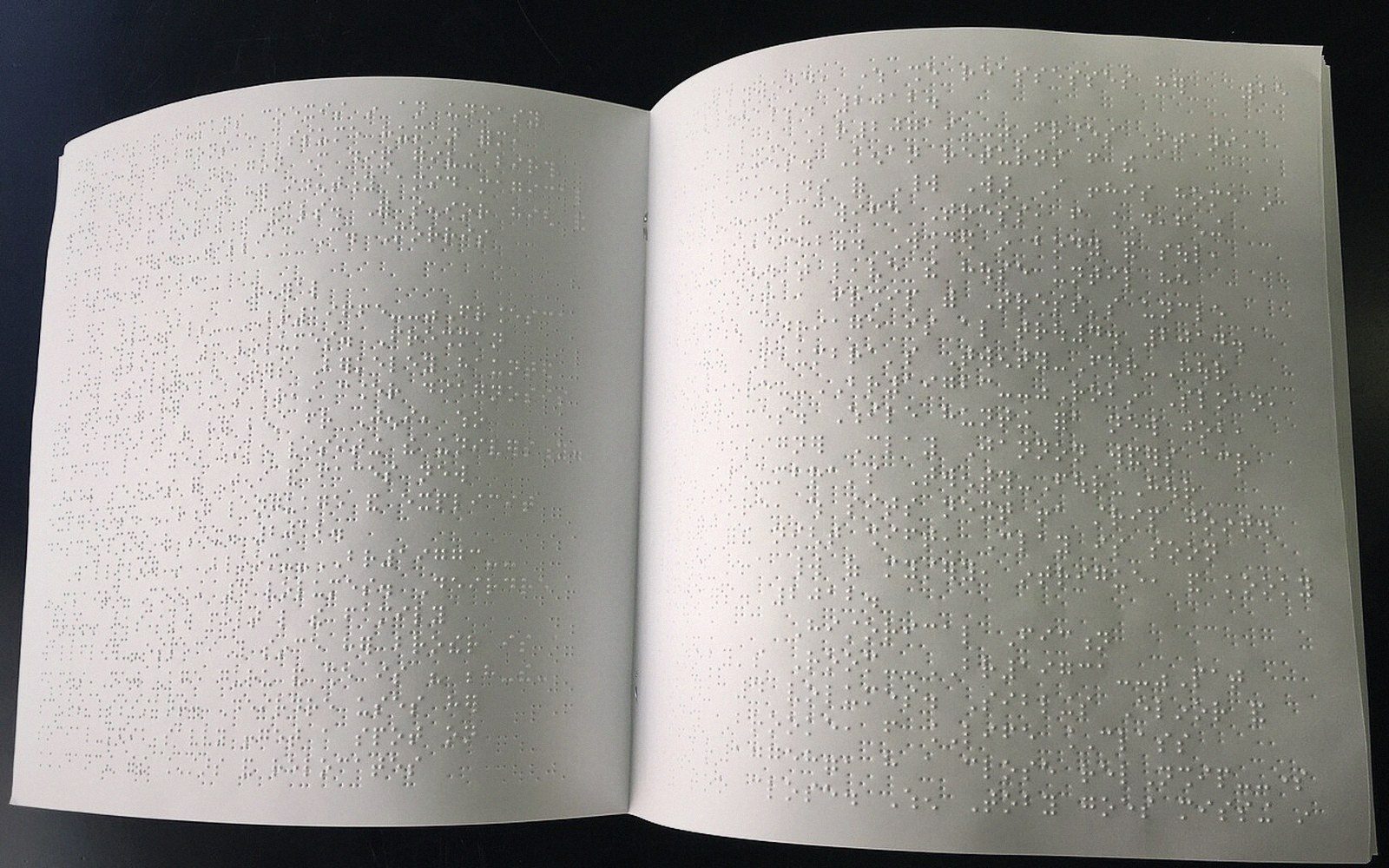
High-volume embossers run continuously and require scheduled pin replacement as a matter of production hygiene, not crisis maintenance. The quality of every dot depends on geometry held to tolerances most readers will never think about.
How the mechanism works
From the register| Item | What it means |
|---|---|
| Embossing vs. printing — displacement of fibre, not deposit of ink | |
| Male pin and female die (stylus and anvil) | the geometry that shapes each dot |
| Dot height | approximately 0.5 mm; must be consistent across a page |
The whole craft of braille production depends on keeping that dome consistent, firm, and legible by touch.
Material constraints
From the register| Item | What it means |
|---|---|
| Braille paper weight | around 160 gsm; why lighter stock fails |
| Interpoint embossing | dots on both sides of the sheet, staggered to avoid crushing |
More in Braille
Related entriesThis is an independent publication about accessible book formats. It is not a library, publisher or lending service, and it does not provide access to books or documents.