Who May Make the Copy At All
Copyright, as a working system, treats reproduction as the right of the rights-holder. That principle is uncontroversial when the reproduction is a paperback or a film adaptation. It becomes uncomfortable when the reproduction is a braille transcript made by a volunteer at the request of a blind student who cannot use the print original at all. For most of the twentieth century, that discomfort was simply absorbed — quietly, irregularly, and often by people who were technically breaking the law and banking on not being prosecuted.

01A permission problem that long predated its solution
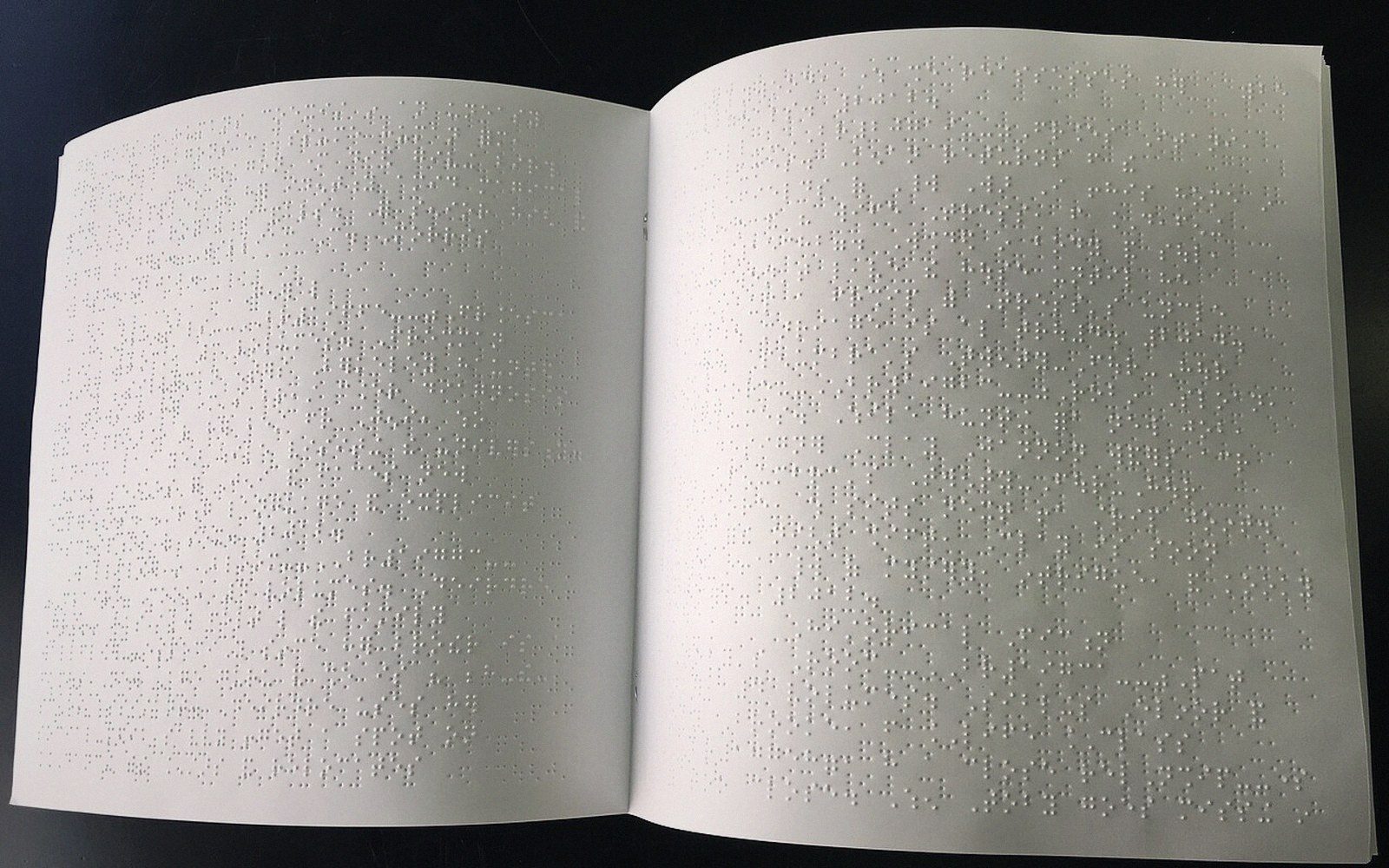
The situation was not born of malice. Copyright statutes were written around the assumption of commercial reproduction. An exemption for a reader who cannot read the print version was not, in many legislatures, a thought anyone had troubled to have. The result was a system where a school for the blind might produce a braille edition of a textbook on the understanding that no publisher would object, and where the legal basis for that understanding was thin to nonexistent. Goodwill is not a licence.
The United Kingdom passed one of the first statutory exemptions, in the Copyright Act 1956, specifically permitting the making of copies for the blind in formats they could use. The United States followed a different route: the Chafee Amendment of 1996, which amended the Copyright Act to allow authorised entities to produce and distribute specialised formats — braille, audio, digital text — for people with print disabilities, without seeking permission from the copyright holder. The word "authorised" carries real weight there. The exemption does not apply to anyone who wants to make a copy. It applies to organisations formally working in this space, carrying accountability for what they produce.
The Chafee Amendment also introduced something that remained contentious: a requirement, initially present in some readings of the law, that the work not be available in accessible form from a commercial source. The idea was to avoid displacing a publisher who had already done the work. In practice the clause created friction — the question of what counts as "commercially available" in an accessible format is less simple than it sounds, and the standard has been refined through subsequent guidance.
02What an authorised entity can and cannot do
The machinery of exemption works through designated organisations rather than individuals. In the United States, the National Library Service for the Blind and Print Disabled, operated through the Library of Congress, is the clearest example: a federal programme that produces and distributes audio and braille materials under the authority the law specifically grants it. Learning Ally and Bookshare operate under similar legal cover, each producing materials for defined populations with print disabilities. In the United Kingdom, the Royal National Institute of Blind People has long produced materials under domestic exemptions. In Canada, the CNIB occupies comparable ground.
What these entities share is accountability: they are registered, they are known, they serve a verifiable population, and they do not distribute their productions commercially. The exemption is not a licence to republish freely — it is a carve-out for a specific purpose, and the purpose must be demonstrable. A narrator recording a novel in a private studio for general sale does not qualify. A studio producing a DAISY audio edition for a disability organisation's membership does.
The individual volunteer transcriber occupies slightly more complicated ground. In many jurisdictions, personal copying for a print-disabled person is also exempted, but the scope varies. Producing a single braille transcript for a specific individual is typically covered. Producing fifty copies and circulating them is not. The line between the two has occasionally required legal clarification.
How the permission evolved
From the register- Pre-1956no statutory exemption in most countries; production depended on publisher tolerance
- UK Copyright Act 1956one of the first explicit statutory exemptions for blind readers
- US Chafee Amendment 1996created the "authorised entity" model; required formats be inaccessible commercially
- Marrakesh Treaty 2013adopted by WIPO; permitted cross-border sharing of accessible copies
- Marrakesh in force 2016EU implementation 2017; US ratification 2018
Large print is treated inconsistently across systems. Some jurisdictions explicitly include it in their accessible-format exemptions; others do not, on the theory that large print is simply print, and therefore competes with the commercial edition in a way that braille or audio does not. Publishers have generally not pursued litigation over large-print editions produced by disability organisations, but the legal position in some countries remains murkier than advocates would prefer.
03The border problem, and how Marrakesh addressed it
Even where a domestic exemption existed, it stopped at the border. A braille edition produced legally by an organisation in Canada could not, without further permission, be sent to a reader in Australia. The rights were territorial; the exemption was territorial; and the result was the book famine — the chronic undersupply of accessible titles that occurs when every country must independently reproduce every title rather than sharing the work.
The Marrakesh Treaty to Facilitate Access to Published Works for Persons Who Are Blind, Visually Impaired, or Otherwise Print Disabled was adopted by the World Intellectual Property Organization in 2013. Its core mechanism is simple in statement: signatory countries agree that accessible-format copies made legally under domestic exemptions may be shared across borders between authorised entities in other signatory countries. What had required individual permissions, or simply occurred in a legal grey zone, became lawful by treaty.
Copyright statutes were written around the assumption of commercial reproduction.
Implementation took time. The treaty's ratification reached the threshold required for entry into force in 2016. The European Union implemented it in 2017. The United States ratified in 2018. As of the mid-2020s the roster of signatories has grown substantially, though it remains incomplete — which means a copy legal in one signatory country may still be impermissible to send to a reader in a non-signatory country.
The treaty also introduced a concept worth naming carefully: the "authorised entity" as a cross-border category. For a transfer to be lawful, both the sending and receiving organisation must qualify as authorised entities under their respective domestic laws. This is not a technicality. It means that the legal chain of permission runs through organisations with real obligations, not through informal networks.

04Why this still matters in practice
None of the above has fully solved the underlying production problem. An exemption permits reproduction; it does not fund it, staff it, or guarantee it will occur. The organisations that qualify as authorised entities are not uniformly resourced, and the titles they have produced represent a fraction of what is published. Knowing that a copy may lawfully be made does not bring the copy into existence.
The permission question and the production question are related but distinct. A publisher who has made a print book accessible from the outset — building the accessible version into the publication workflow rather than leaving it to a third party — operates differently from the retrospective exemption framework: no separate permission is needed, no separate organisation must intervene, because the accessible format is the original edition. The exemption system is, in part, a response to the failure of that model to have been widely adopted.
What the law has done, haltingly and across many decades, is move from silence — in which accessible reproduction existed only by tolerance — to explicit permission — in which defined organisations may reproduce for defined populations under defined conditions. The border has partially opened. The obligation remains on organisations to use the permission they have been given.
Who qualifies
From the register| Item | What it means |
|---|---|
| Authorised entity | an organisation formally designated under domestic law to produce accessible formats for print-disabled people; not an individual, not a commercial producer |
| National Library Service (US) | federal programme operated through the Library of Congress; produces braille and audio under statutory authority |
| Bookshare / Learning Ally (US) | operate under the same Chafee exemption; different populations and formats |
| RNIB (UK) | Royal National Institute of Blind People; produces under UK domestic exemptions |
| CNIB (Canada) | Canadian equivalents; subject to Canadian copyright law |
More in Permission
Related entriesThis is an independent publication about accessible book formats. It is not a library, publisher or lending service, and it does not provide access to books or documents.