What It Costs to Make One Book
The numbers behind every title that does or does not exist in an accessible format.
01The Labour Is the Price
A print book costs what it costs to manufacture: paper, ink, binding, a run of thousands that spreads fixed costs thin. An accessible book costs what it costs to make once, because accessible formats rarely benefit from economies of scale. That single-copy arithmetic drives everything about why the catalogue is the size it is.
Audio is the clearest case. A professional narrator typically takes somewhere between two and three session hours in the booth for each finished hour, accounting for retakes, breath noise and the small corrections that accumulate across a long text. A 300-page novel might run to nine or ten finished hours of audio. Add editing — cleaning the raw files, levelling volume, catching mispronunciations — and quality-control listening, and a single title can consume forty to sixty staff hours before it is certified complete. At professional rates, that is a serious production budget for one book that may serve hundreds of readers rather than hundreds of thousands.
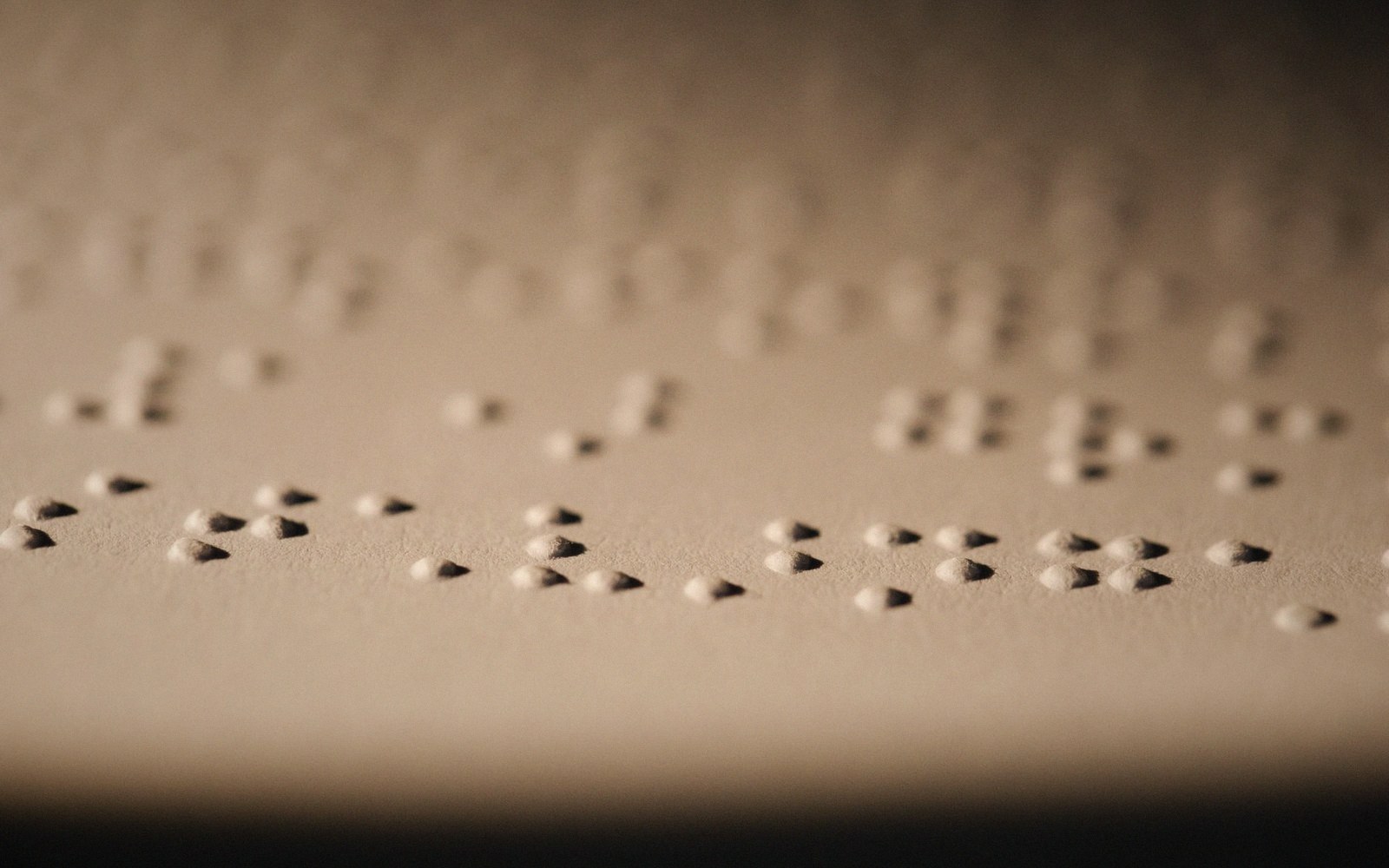
Braille involves a different kind of labour but no less of it. Specialist transcription software can convert a clean digital text automatically, but clean digital text is rarely what a publisher supplies. Formatting, tables, images requiring tactile description, mathematical notation and anything set in columns must be handled by a human transcriber who understands braille conventions, not just spelling. A trained transcriber might complete ten to fifteen finished braille pages per hour on straightforward prose. A technical textbook with diagrams can drop that rate sharply. When the finished embossed volume runs to several hundred pages — as it often does, given how much space braille occupies — the hours mount accordingly. Proofreading then falls to a braille reader; sighted checking cannot substitute for what touch alone can catch.
Large print sits at the lower end of production cost but is not free. Resetting a text for large print means decisions about typeface, leading, measure and paper that require someone who understands low-vision typography, not someone who has simply enlarged the PDF. If the source files are clean, a competent designer might reflow a standard novel in a day. If the source is a scanned page image — which is common with older titles — that day becomes a week.
02Equipment and Overhead
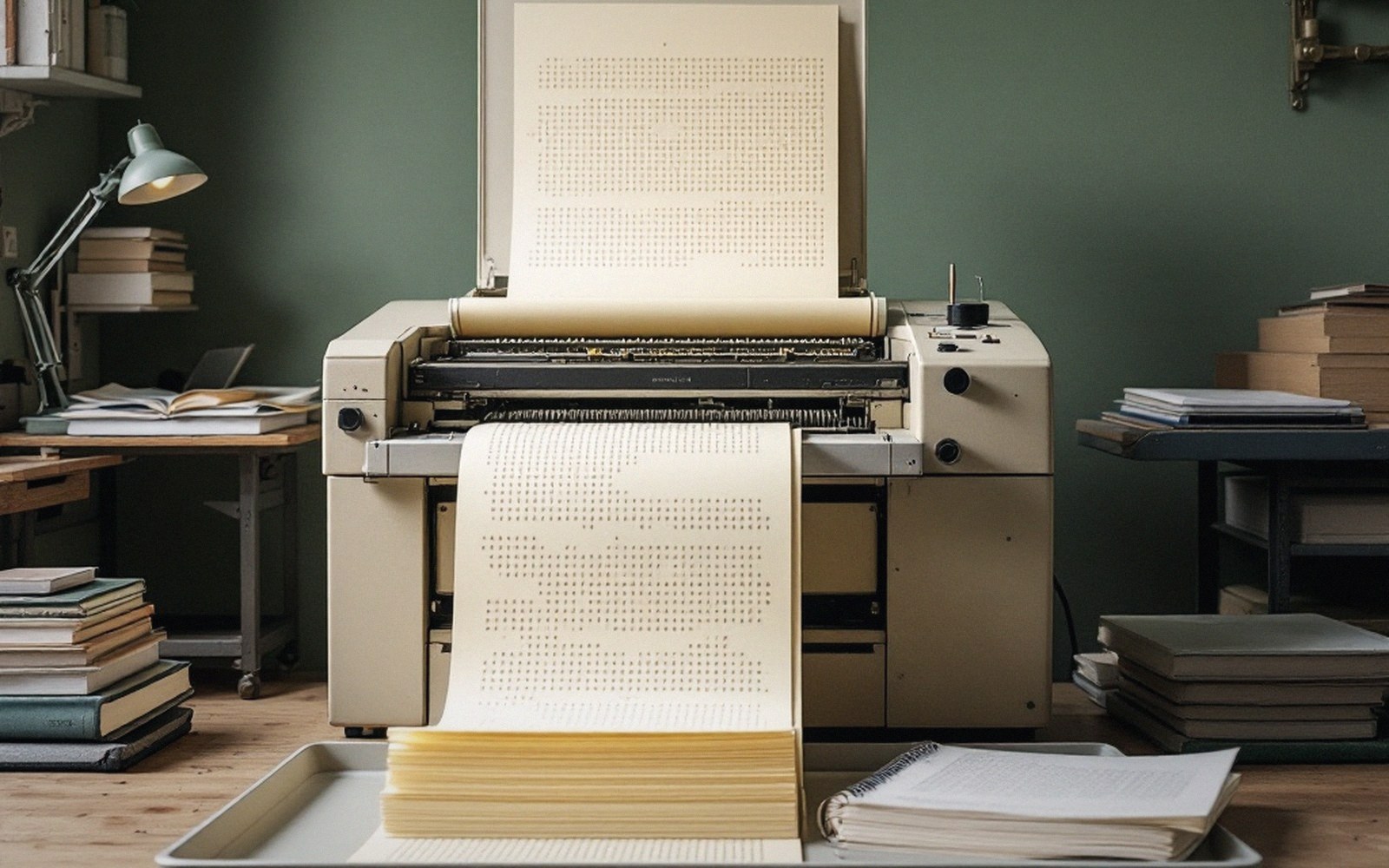
Behind the labour sits equipment that does not appear in any per-title budget but is real cost nonetheless. A professional embosser capable of producing double-sided braille at production speed costs tens of thousands of pounds or dollars; the heavy paper it requires is a recurring consumable. A recording booth, however modest, represents capital investment and ongoing maintenance. DAISY or EPUB production requires software licences, accessible masters to be tested across multiple reading devices, and someone competent to structure the files so navigation actually works.
Organisations that produce accessible books — whether national libraries for the blind, specialist charities or dedicated units within larger publishers — carry these overhead costs across every title they produce. A small organisation making a few hundred titles a year cannot spread them the way a commercial print house spreads its press costs. The per-title overhead is therefore high even before a transcriber or narrator starts work.
The production clock
From the register| Item | What it means |
|---|---|
| Audio narration and editing | 40 to 60 staff hours for a standard novel |
| Braille transcription | 10 to 15 pages per hour on clean prose; less for technical content |
| Large print reflowing | roughly one day for clean source files; much longer for scanned originals |
| EPUB/DAISY structuring | additional QA time per title, device-tested |
03The Arithmetic of the Catalogue
Add the hours and the overhead, and the reason accessible catalogues are limited becomes simple arithmetic rather than indifference. If a mid-sized accessible-book producer has a budget that supports, say, four hundred new titles a year across all formats, every title added to that list is a real production decision, not a filing decision. Titles are prioritised: new releases, educational texts under exam pressure, books requested by readers whose needs are not yet met. Older titles — perfectly readable in print — may wait years, or never arrive at all.
This is the mechanism behind what is sometimes called the book famine: not a policy failure in isolation, but the compounding effect of production costs that have never been subsidised at the scale print publishing has always taken for granted. Every accessible book that exists represents real hours, real equipment and a real decision that this title, now, was worth the cost.
At professional rates, that is a serious production budget for one book that may serve hundreds of readers rather than hundreds of thousands.
More in The Room
Related entriesThis is an independent publication about accessible book formats. It is not a library, publisher or lending service, and it does not provide access to books or documents.